
A Conversation with Jessie Hooker-Bailey
It was such a treat to speak to Jessie Hooker-Bailey about Sondheim, Jonathan Larson, and much more besides. Currently in rehearsals for The Jonathan Larson Project, Jessie recently played Sarah in the national tour of Company. On Broadway, she has appeared in Waitress and Beautiful: The Carole King Musical, and she also appeared in the world premiere production of The Devil Wears Prada in Chicago. I loved this conversation, which begins below:
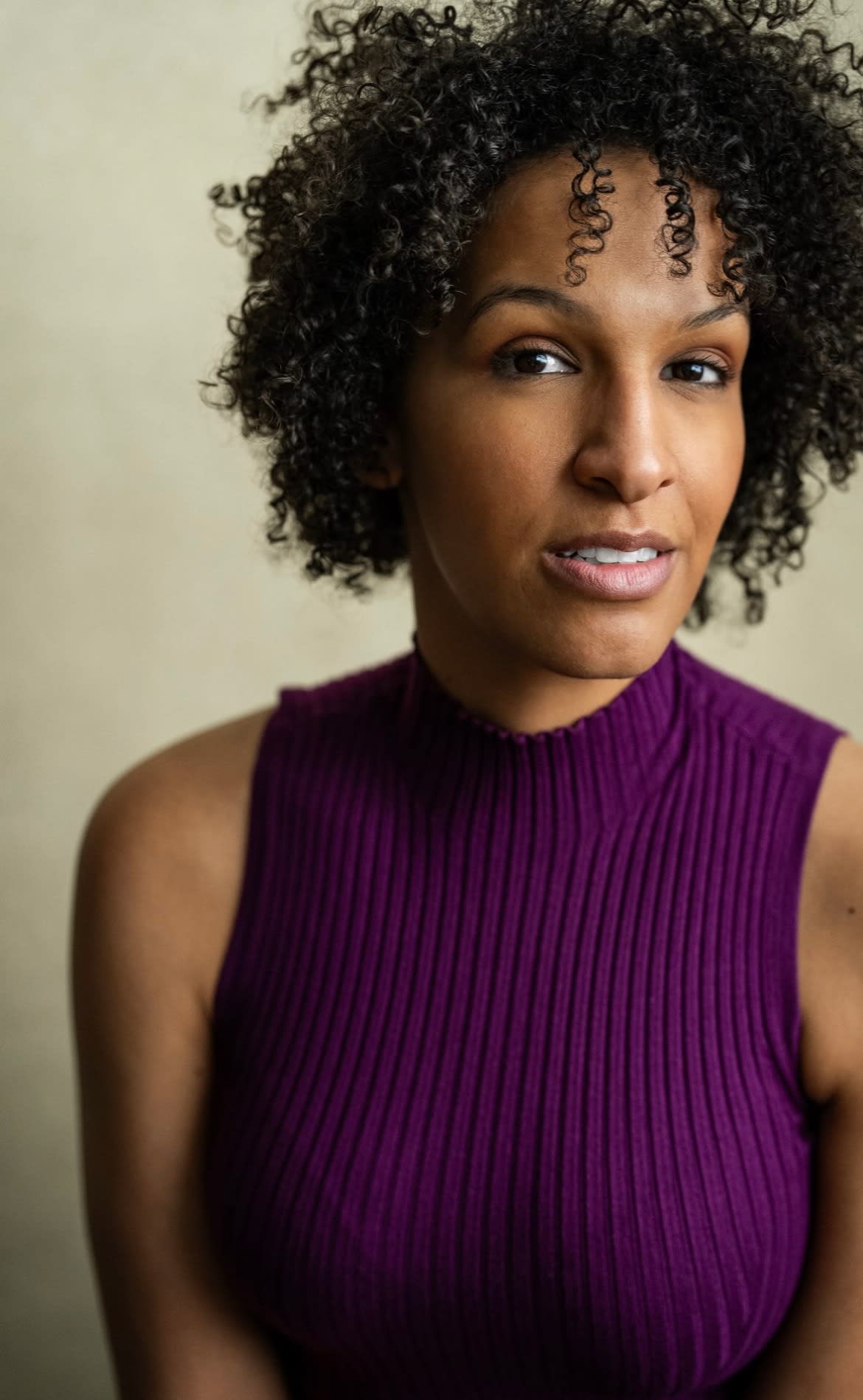
It’s such a pleasure to meet you. As we speak, you’ve just embarked on something very exciting indeed… I’d love to start there.
Yes! I just finished my first week of rehearsals for The Jonathan Larson Project. I’m really excited. It’s going to be only the third ever Jonathan Larson production in New York City, which is so cool to be a part of. My husband is the male standby and I’m the female standby, which means we’re responsible for all of the material we cover. I’ve wanted a standby job for so long—to be responsible for maybe one person, or two in this case, and to really experience that and see how I like it.
It’s really awesome to feel like I’m a part of theatre history with The Jonathan Larson Project. Jennifer Tepper, who has been behind the piece for the last 10 years—she’s the reason it’s happening—is filled with Jonathan Larson information. Anything you can think of, she has access to so much of his material, and what he was thinking, and his notes and notepads. It’s so cool that we get to approach each number knowing what his intention was with it, and then getting to have our own creative liberties within that. So far there’s just been a week of rehearsals for me, but it’s been packed with information, and my head is exploding with so many lyrics. It’s really exciting stuff, and so relevant to the things going on today. I just feel really excited to even be a part of it.
Your last big role was in Company, and now your head is full of Larson… Anyone who’s seen Tick, Tick... Boom! will know how important a figure Sondheim was for Larson. Has that through-line from one composer to the other been palpable as you’ve lived and breathed their music?
It’s funny you say that, because there’s a particular song in this show that Lauren Marcus performs called “Hosing the Furniture.” Jonathan won the Stephen Sondheim Award for that song. It was one of Jonathan’s favorite songs, and Sondheim complimented and loved it. I’m learning those lyrics right now, and they’re very Sondheim-esque. It’s so many pages packed with so many words, every word meaning something so specific. It’s wild how it intertwines!
You look at a song like that as an actor, and at first you’re like, “Oh God! How is it gonna happen?” But I have journal entries from just a couple of months ago when I entered the Company tour, being like, “How is this going to get into my head?” And eventually it does.
Am I right in thinking that Company was your first principal contract, however we define these things?
I know… everyone has different words for these things. I technically have played principals before. When I was in Waitress on Broadway I covered Dawn, so that was my principal-on-Broadway debut, we could say—but I never had the role myself. Everyone in Company had a principal contract, and everyone has their shining moment. What I love also about Company is it’s such an ensemble show. It’s one of those things where I’m in the spotlight for the first 35 to 40 minutes of the show, and then I’m really supporting everyone else after.
And I think that harkens back to why I got into theatre in the first place, which is for connection, and to be supportive of telling each other’s stories. I loved being a part of “Another Hundred People,” moving the letters, being kind of in the background when we’re supposed to be, and then out as New Yorkers when we’re supposed to be.
When you auditioned for Company, were you looking specifically at the role of Sarah?
This is such a good story, because no, Sarah was not on my radar! A year or so before I joined Company, I was auditioning for it. Originally, when they were making the tour cast, I went in for Jenny because I got my equity card playing Jenny at a theater in Rochester, New York. So I was like, “Oh, that’s the part I’m right for.” They switched the scenes—Jenny is now doing David’s lines. But I was like, “I think I’m still similar.” Nikki Renee Daniels did it on Broadway, and I was like, “Oh, I think we have similar energies. This will work.” I made it to final callbacks. It didn’t happen. I found out on my 35th birthday, actually. I remember sitting at dinner, and I was like, “I feel like crying, but I’m gonna have a glass of wine, and it’s gonna be okay.”
And then, truly, a year later, auditions come back around and they’re looking for a Sarah—and casting wanted to see me. And I was like, “Oh, I’m good. I don’t think I’m right for that role.” All I could think of was Jen Simard, you know? And my friend Kathryn too, who I knew was playing Sarah on the road. I was like, “Oh my God, they’re comedy geniuses. I could never!” But my agent was like, “Why don’t you just go in and see?” As I was reading the scene, I was like, “Oh, I could do my thing with it and see what happens.” And then I got asked to come into callbacks, and then made it to finals, and then found out I got it. And they were like, “Can you start tour in four days?”
It’s so funny how you may think you know what’s best, but you so often don’t. And Sarah really reminded me that I could use my silliness and my fun, and it works. I haven’t gotten to see myself in those shoes in a long time. And the creative team was really great about, like, “Hey, you don’t have to do it like Jen. You don’t have to do it like Kathryn. You can do it like you.”
I’d love to ask about touring in general, but particularly with Company. It’s true that the characters are in some ways these broad archetypes, but it’s also such a New York story. Does the energy in the room seem to shift tangibly from city to city?
Absolutely. There are certain parts of our country where you realize quickly how much of a New York show it is. With things like divorce, we’re kind of laughing at divorce and making jokes about it. In certain areas it’s like, “That’s not funny.” I joined for the last four months, so we were in cities like San Francisco and LA where audiences were super receptive—and even, I would say, hungry and ready for this show, because it hadn’t toured before. Can you believe that?
Then elsewhere, there were nights that were really great and we were like, “Oh my God! They’re so into it!” But I remember there was a pilates class that a cast member took where they overheard people talking about the show, and they were like, “I just don’t understand how they could be making fun of marriage!” We laughed it off, because that’s what Sondheim wanted. He wanted people talking about his work, arguing about it. Should Bobby/ie be a man or a woman? And what does that mean? I felt really lucky, no matter where we were.
I’d love to know about your own introduction to Sondheim.
In high school, I had an introduction to Into the Woods. That’s been my favorite musical ever since. That OBC is like my shining armor when it comes to Sondheim. So when Company first came around, it was something that—though I studied musical theatre—it wasn’t like, “Oh, I must do Company.” It felt like something I might come to when I’m older. But the minute that opening starts and you get sucked in, and you not only learn it but accomplish it with a group of people, you’re like “We can do anything. This is awesome.”
At that high school age, did you have a clear sense of what you wanted to go on to do professionally?
I think I was one of those kids that always loved singing. I’m really attached to the eighties women of pop and R&B: Whitney Houston, Mariah Carey, and so on. So I loved singing and storytelling in that way, and then I kind of fell into theatre through music. I don’t know if I knew where I fit, but I met so many people through community theatre. My first show introduced me to Celia Hottenstein, who’s understudying Glinda on Broadway right now, which is so wild. But we grew up together, and her mom told me about Aida. That was my first Broadway show.
And then, as I got deep into the weeds of theatre, this mom of my friend was like, “You need to see Heather Headley on Broadway.” So that was first experience of, “Oh, a Black woman doing this thing!” I’ll never forget going to the Palace and hearing her sing. And Idina Menzel was Amneris. It was such a star cast. So Heather was the light of, “Oh, there’s someone that’s doing it. She’s leading a show.”
In high school, I just loved performing in any way that I could. And then, as I started to hone in, I was like, “Okay, you can make money doing this. Awesome. Well… kind of make money.” I think I’m still trying to figure out where I fit. My dream and goal is still to be a leading lady on Broadway, but it’s also grown to, like, what does that really look like?
Are there specific roles that you see as goals in your future? How do you think about that side of things?
You know, I used to. I used to be like, “I am Elphaba. I will be her. I understand her.” I used to have roles like that and get super specific. But now I think I’m more specific in the way of how I want to create. Yes, I do want to be the first one to wear the costume. With Waitress and Beautiful, my two Broadway shows, I’ve come in and replaced. With The Devil Wears Prada, the first version that people saw in Chicago, that was my introduction to building something. I’d been doing those workshops since 2019 and then did the Chicago production in 2022. I went on during previews and had that whole experience and playing Andy.
Prada taught me a lot, but it taught me that I can create something. I don’t have to be like anybody else. I can use my ideas and the story and work with the director. As an understudy, I really got to sink my teeth in and learn the qualities of who I am and what I could add to something. So I’m super excited about the possibilities of creating something myself and being an original Broadway cast member, getting to do the Tony’s and the Thanksgiving Day Parade. There’s so much I haven’t done yet that I’d really like to do, and I’d love to be the first one to do it in whatever role that happens to be.
It’s been so great to talk. When do previews begin for The Jonathan Larson Project?
Previews begin February 14th, on Valentine’s Day. The official opening is later, but for Gil and I, that’s when we really need to be ready for anything.
Beyond Larson, I’m excited to see what happens in the future—and I really do credit Company as being the thing that reminded me that I love this. I think I definitely suffered some heartbreak before. You know, you want your show to go to Broadway and be a hit, and to run forever, and it didn’t happen that way. And so I think after that, I went through a little bit of a period of, “Oh, do I like this anymore?” And Company was the door opening of, “Oh, I do! Oh, there it is. There’s little theatre Jessie.” And it’s so cool that it was Sondheim.
To buy tickets and to find out more about The Jonathan Larson Project, opening Feb 14 at the Orpheum Theatre, NYC, click here.